
If your home is connected to a heat network, this section is here to help you understand how your heating and hot water are supplied, what protections you have as a customer and where to go if you need support.
Here, you’ll find:
- The latest updates about your heat service
- Information about your rights under Ofgem regulation
- Guidance and support with billing, complaints and energy efficiency
- Contact details for emergency repairs, maintenance and billing
- A resource centre where you can access important documents
This section brings everything together in one place so you can quickly find the information you need.
Heat networks and your protections
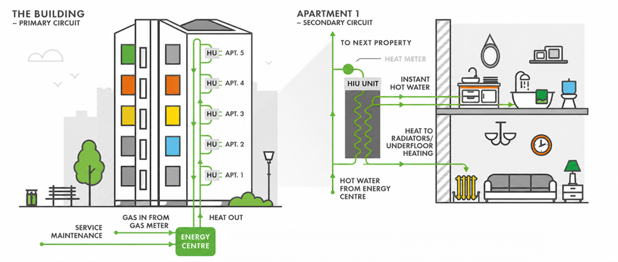
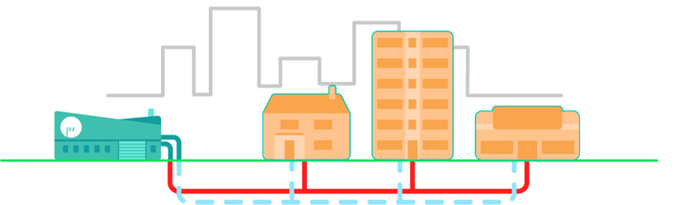
A heat network, also called communal or district heating, supplies heating and hot water from a single central plant room or energy centre. Heat is produced in one location, usually by a gas boiler, a combined heat and power (CHP) unit or a heat pump, and is delivered to homes through insulated pipework. Instead of having individual boilers, residents receive heat through a heat interface unit (HIU) in their home, which looks similar to a domestic boiler. A heat meter installed on or near the HIU measures how much heat and hot water you use.
Because all homes share one heat source, heat networks are often more energy efficient, and future upgrades to low carbon technology can be made centrally rather than in each home. NHG operates many heat networks and supplies heat to thousands of residents across our communities.
From January 2026, Ofgem became the official regulator for heat networks across the UK. This means residents now benefit from stronger protections similar to those for gas and electricity customers. These include clearer terms and conditions, fairer billing and back billing rules, proactive debt support and increased safeguards for residents in vulnerable circumstances. NHG follows Ofgem guidance to make sure customers receive a fair, reliable and transparent service.