

Notting Hill Genesis has successfully protected a rare wildflower species while keeping plans for 151 affordable homes at Rotherhithe Reach on track, with support from the Mayor of London’s New Homes Accelerator programme.
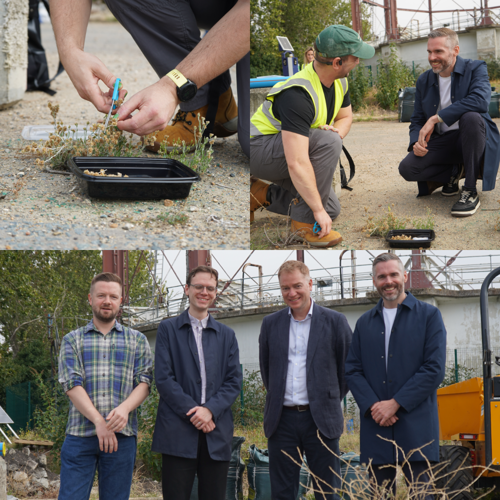
Teams from Notting Hill Genesis were joined by Tom Copley, Deputy Mayor of London, to ensure the safe transferral of protected wildflowers from the Rotherhithe Reach site could take place in time to meet critical funding deadlines.
The former gasworks site is set to deliver 151 affordable homes, including 43 homes for social rent and 108 shared ownership properties, alongside new public open space, play areas and landscaped green routes connecting the development with the wider Canada Water neighbourhood.
During ecological surveys, Jersey Cudweed, a protected wildflower species, was found by the NHG team, and its removal from site can only legally be permitted under licence from Natural England.
To help resolve the issue, Notting Hill Genesis reached out to the GLA’s New Homes Accelerator team, who were able to work with Natural England to ensure that the license for removal could be progressed without causing knock-on delays for the development, which is set to deliver 151 new affordable homes on a disused brownfield site. Without this intervention, the project risked losing funding, putting the delivery of affordable homes at risk.
Ecologists were brought in to gather seeds from the plants, which will be used as part of the site’s green roof development, when the buildings are completed. The green roof will be home to a number of native plant species including the Jersey Cudweed, which will attract pollinators such as bees and butterflies, be drought-resistant, and support biodiversity across the site.
The former Rotherhithe Gasworks was decommissioned in the 1950s, but with grant funding support from the GLA, NHG will be delivering the development as 100% affordable housing, comprising 43 social rent homes and 108 shared ownership properties.
Following the removal of the Jersey Cudweed, work on the site has now begun, starting with the demolition of the gas holder and preparing the site for construction. Homes are expected to complete in early 2029.
The development will also provide extensive community and environmental benefits, creating a high-quality place for residents and delivering approximately 0.46 hectares of publicly accessible open space, a new landscaped green link between Salter Road and Windrose Close, dedicated children's play space and enhanced access to Surrey Water and surrounding routes.
Tom Copley visited the site to see the relocation work first-hand and meet the teams involved in delivering both the housing scheme and the environmental mitigation programme.
Matthew Cornwall-Jones, NHG Chief Homes Officer, said:
"Rotherhithe Reach will transform a long-vacant brownfield site into much-needed affordable homes, public green space and new opportunities for the local community.
The discovery of Jersey Cudweed presented a challenge that needed to be resolved carefully and responsibly. By working closely with our partners, including the Mayor's New Homes Accelerator team, Natural England and specialist ecologists, we've been able to protect this rare species while keeping plans for 151 affordable homes moving forward.
This is a positive example of how development and environmental stewardship can go hand in hand."
Tom Copley, Deputy Mayor for Housing and Residential Development, said:
“I saw first-hand how New Homes Accelerator London is stopping schemes being stuck in the weeds, literally in the case of the 151 affordable homes we unblocked in Rotherhithe. Working closely with our partners Notting Hill Genesis, MHCLG and Natural England, we were able to accelerate the delivery of this 100% affordable scheme and put long-vacant land back into use, all while building more of the homes Londoners desperately need. It is just one example of what is possible when we work at pace and in partnership to build a fairer, more prosperous London for everyone.”


